

Family law in Turkey holds the most sensitive dynamics of the social structure and is one of the areas where the need for reform is most frequently voiced. The 12th Judicial Package, which has generated significant public interest, aims to bring radical solutions to the chronic duration issues of divorce cases and the emotional exhaustion experienced by the parties involved. One of the most radical changes introduced with this package is the idea of separating ancillary claims—such as fault determination, compensation, and alimony—from the divorce action itself. While the current system leaves parties virtually held hostage due to trials that drag on for years, the new regulation is based on the logic of "concluding the divorce swiftly and deciding the financial consequences later." In this article, we will dissect this revolutionary change planned in family law from a legal perspective.
Under our current Turkish Civil Code system, a divorce lawsuit is generally conducted as a whole, encompassing the financial consequences of the divorce (material and moral damages, poverty alimony, child support) and custody. For the court to rule on the divorce, the fault status of the parties must be fully determined and these financial obligations must be clarified. However, in practice, hearing witnesses, conducting fault investigations, and researching financial statuses cause cases to last for years. When I analyze the justice mechanism as a law student, I observe that this prolonged process forcibly maintains a marriage on paper that has actively ended in reality, legally preventing the parties from establishing a new life or remarried. The approach focused on the "Principle of Procedural Economy" sought to be introduced by the 12th Judicial Package is the most concrete step taken to overcome this bottleneck.
The "Separation" Model in Divorce Law: How Will the System Work?
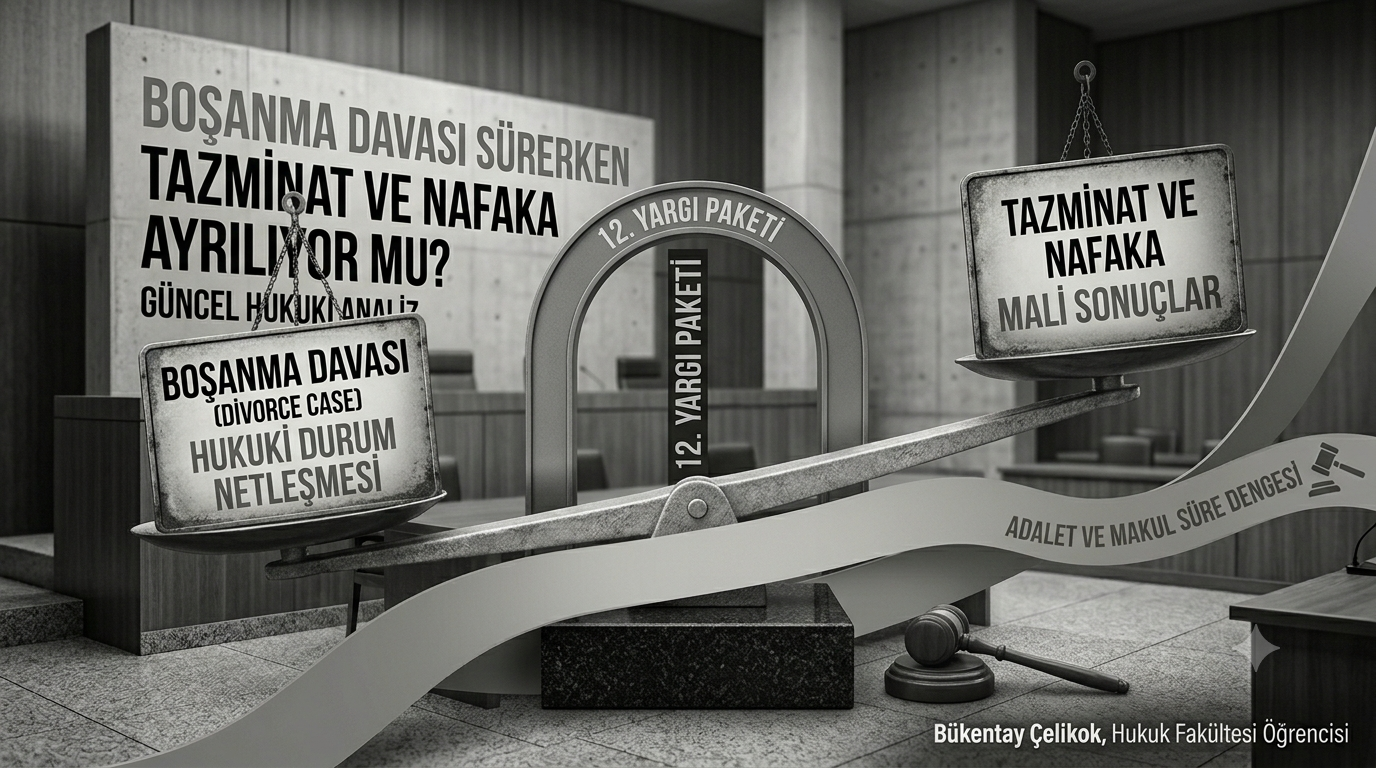
The greatest innovation brought by the new regulation is that the court will be able to rule on the "divorce" without keeping the parties waiting any longer once the intent to divorce and the irretrievable breakdown of the marriage union are established. In other words, complex and contentious processes—such as what the fault proportions of the spouses are, who will pay how much compensation, or the amount of poverty alimony—will be separated from the divorce decree. The court will swiftly terminate the marriage, while claims regarding alimony, material, and moral damages will continue to be handled either as a separate lawsuit or as a subsequent phase of the main case. Consequently, the parties will lose the power to "lock up" each other's lives through financial demands, and because the divorce status becomes finalized, the social and legal standings of the parties will gain clarity.
"This reform, which positions divorce as a right and compensation or alimony as a mere receivable, aims to liberate the captive civil statuses of individuals and heal the social wounds arising from delayed justice."
Will Temporary Alimony and Provisional Measures Continue?
One of the most curious topics among the public is whether the economically weaker spouse and the children will suffer during this separation process. The legislator does not interfere with the institution of "temporary alimony" (tedbir nafakası) ruled upon the filing of a divorce case. Temporary alimony aimed at ensuring livelihood during the continuation of the lawsuit, as well as provisional measures regarding custody, will still be granted with urgency. The only thing that changes is that permanent financial rights—which turn into poverty alimony or compensation once the case concludes—will no longer delay the finalization of the divorce decree. In conclusion, this model introduced by the 12th Judicial Package modernizes procedural rules in Turkish family law while standing as a revolutionary transformation aimed at securing the parties' rights to a fair trial within a reasonable time.